
Modrá jeskyně v září: nejstřeženější tajemství Jadranu
Září je měsíc, který si pro Modrou jeskyni vybírají nejzkušenější cestovatelé do Chorvatska: teplá voda, klidné moře, řídnoucí davy, zlaté světlo.
By Marinko (Co-founder & Skipper) · 7 min čtení · Updated 2026-05-23
Proč si naši stálí hosté vybírají září
Zhruba třetina lidí, se kterými v září jezdíme na trasu k Modré jeskyni, ji už dříve absolvovala, někdy i vícekrát. Vracejí se právě kvůli tomuto měsíci. Je vzácné, aby se v jakémkoli oboru podnikání vracející se zákazníci soustředili tak jasně do jednoho období, a to něco vypovídá.
Právě tato kombinace dělá září jedinečným: moře je stále letně teplé (24 až 26 stupňů v první polovině měsíce), ale červencové a srpnové vedro, davy, ceny i vítr maestral už odezněly. Dostanete trasu jako z pohlednice, ale bez davů jako z pohlednice.
1. týden: začátek září (1. až 7. září)
Tento týden je teplotou i atmosférou často k nerozeznání od konce srpna. Školy v severní Evropě právě znovu začaly, takže rodinná vlna turistů opadla. Ceny výletů obvykle klesají o 10 až 20 procent.
Fronta na jeskyni znatelně klesá: obvykle 10 až 15 minut místo srpnových 30 až 60 minut. Stiniva se uklidňuje. Náměstí v Hvaru je večer rušné, ale stůl ještě seženete.
2. až 3. týden: polovina září (8. až 21. září)
Ideální období. Voda má 23 až 25 stupňů: stále dost teplá na pořádné hodinové plavání. Vzduch má 24 až 28 stupňů: počasí na tričko, bez vysilujícího vedra. Fronta na jeskyni je krátká. Maestral zeslábl, takže přejezd otevřeným Jadranem je nejklidnější za celý rok.
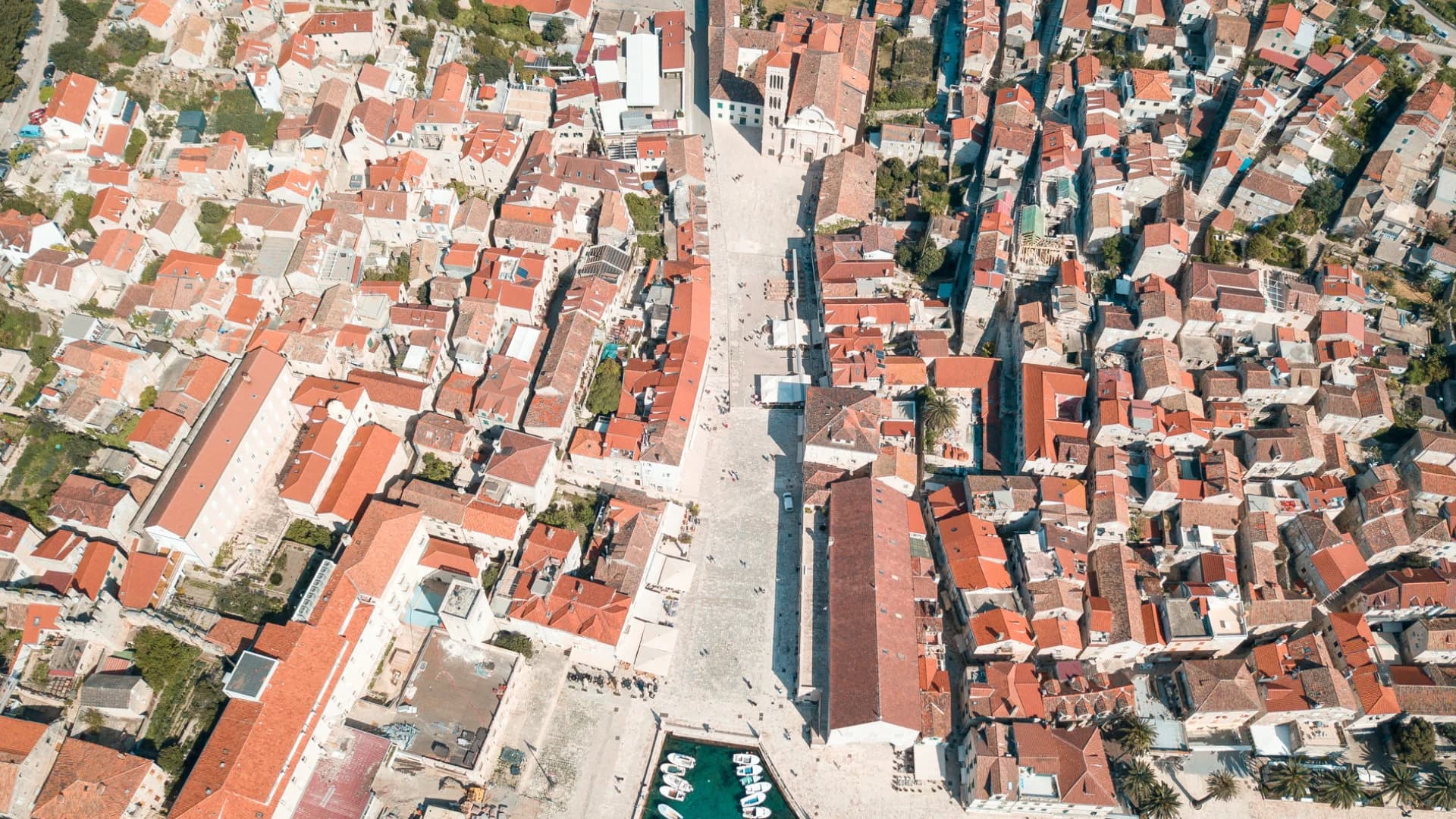
Hvar není přeplněný turisty, spíš působí jako město, kde se skutečně žije. Pakleni ostrovy nabízejí prázdné zátoky. Stiniva je přístupná. Světlo je zlatavě teplé a níž na obloze, což milují fotografové.
Pokud máte při plánování cesty možnost výběru termínu a alespoň nějakou flexibilitu, zaměřte se na druhý nebo třetí týden v září.
4. týden: konec září (22. až 30. září)
Moře klesá na 22 až 24 stupňů, stále příjemné na koupání. Vzduch může brzy ráno klesnout na 20 stupňů a v poledne vystoupat na 26 stupňů. Některé dny jsou letně teplé, jiné už mají první nádech podzimu.
Davy jsou zjevně řídké. Ceny jsou na úrovni konce sezóny. Počasí je statisticky proměnlivější než v srpnu, ale většinu dní je stále spolehlivé.
Konec září je skvělá volba, pokud přijmete mírné riziko větrného dne a chcete nejklidnější verzi trasy.
Proč je moře v září tak klidné
Maestral (dominantní letní odpolední vítr, kvůli kterému je v červenci a srpnu přejezd otevřeným Jadranem rozbouřený) v září slábne, jak se vyrovnává teplotní rozdíl mezi mořem a pevninskými horami. Některá zářijová odpoledne je otevřené moře naprosto hladké jako sklo.
To se týká především přejezdu k Biševu. Dvouhodinová plavba k jeskyni je nejvíce vystavený úsek celé trasy a klidné zářijové moře znamená pohodlnou plavbu pro hosty, kterým by srpnové podmínky připadaly náročné.

Zářijové světlo a fotografování
Slunce v září stojí na obloze níž než v červenci. Uvnitř Modré jeskyně to znamená, že podvodní vstup přijímá světlo pod mírně jiným úhlem: záře jeskyně je stále elektricky modrá, ale s o něco výraznějším stříbrno-bílým nádechem. Jiné než v srpnu, ne horší.
Mimo jeskyni nabízí září nejfilmovější světlo v roce. Polední slunce už není brutálně kolmé, stíny mají tvar a zlatá hodinka trvá zhruba od 17:30 do západu slunce kolem 19:00. Klasická fotografie Pakleni ostrovů z hvarské pevnosti při západu slunce je zářijová fotografie.
Kdy si rezervovat výlet na září
Skupinový výlet: obvykle stačí jeden až dva týdny dopředu, na víkendy tři týdny.
Soukromý výlet: tři až pět týdnů dopředu. Víkendy se stále plní brzy.
První týden v září se plní nejdříve, protože někteří provozovatelé později v měsíci snižují kapacitu.
Pro koho je září ideální
Vracející se návštěvníci Chorvatska, kteří trasu už absolvovali v létě a chtějí ji zažít klidnější. Novomanželé na líbánkách. Fotografové. Páry. Starší hosté, kterým srpnové vedro připadá vyčerpávající. Kdokoli s flexibilním termínem.
Na co si dát pozor
Občasná časná bóra (studený suchý vítr od severu) může koncem září na den až dva uzavřít přejezd k Biševu. Statisticky vzácné, ale dobré to vědět. Jako vždy si do svého plánu cesty ze Splitu zahrňte i náhradní termín.
Některé sezónní restaurace na Pakleni ostrovech a v částech Visu začínají koncem září zavírat. Město Hvar zůstává plně otevřené po celý říjen.
Další čtení: podívejte se také na náš měsíční průvodce Modrou jeskyní, článek o soukromém výletu s fotografem na palubě, text s nápady na líbánky u Modré jeskyně a čtení o mimosezóně duben–říjen–listopad pro sousední termíny. Rezervujte na /tours/blue-cave-5-island-tour.
Ready to plan the route?
Compare group and private speedboat tours from Split, or go directly to the route mentioned in this guide.
About the author

Marinko
Co-founder & Skipper · 20 seasons in Split
Co-founder and one of the two captains who built Navy Blue Yachting from a single boat. Over 20 years on the Adriatic and a lifelong passionate fisherman, he reads sea conditions the way most people read a weather app. If you are on a flagship Blue Cave day in shoulder season, he is most likely the captain.
Meet the rest of the crew →