
Blå Grottan-turen från Split: ultimata guiden 2026
Den mest detaljerade guiden till Blå Grottan på hela internet: ljusfönstret 09:00–11:30, hela 5-öturen timme för timme
By Marinko (Co-founder & Skipper) · 16 min lästid · Updated 2026-09-01
Varför den här guiden finns (och vad den täcker)
Vi har kört speedbåtsdagar från Split till Blå Grottan i över tio år. Under en normal säsong kör våra skeppare den här rutten fyra eller fem dagar i veckan mellan slutet av april och början av november: det är gott och väl över 1,200 individuella Blå Grottan-dagar i bagaget. Den här guiden är allt vi har lärt oss, samlat på ett ställe, så att du kan planera en utmärkt dag utan att tillbringa tre nätter i ett forumträsk.
Den är också oblygt lång. Blå Grottan är en av de där bucket list-upplevelserna där små detaljer gör stor skillnad: vilken timme du åker, vilken månad du väljer, om du bokar grupp eller privat, vad du gör på lunchen i Hvar, hur mycket kontanter du tar med till Biševo. Hoppa över de delar du inte behöver. Innehållsförteckningen nedan visar var allt finns.
Det här täcker vi: vad Blå Grottan faktiskt är och inte är; ljusfönstret 09:00–11:30 och varför det inte går att förhandla om; bokning för 2026 (när, hur, vad som blir fullbokat först); hur du väljer mellan operatörer i Split utan att bli lurad; hela 5-öturen timme för timme; grottavgiften på Biševo förklarad i detalj; vad du ska ta med ombord; bästa månaden att åka; om dagen passar för barn, familjer, smekmånadspar eller ensamresenärer; vad som händer när vädret tvingar fram en ombokning; matematiken bakom grupp kontra privat; samt 14 vanliga frågor på slutet. Har vi missat något berättar vår besättning det för dig på WhatsApp: länken finns på varje turssida.
Redo att jämföra avgångar, priser och vad som ingår i varje alternativ? Börja med vår översikt över Blå Grottan-turen från Split och kom sedan tillbaka för detaljerna.
Vad Blå Grottan är, och vad den inte är
Blå Grottan (Modra špilja på kroatiska) är en havsgrotta på den lilla ön Biševo, cirka fem kilometer utanför sydvästra kusten av Vis. Från Split är det ungefär 50 sjömil: två timmar på öppna Adriatiska havet i speedbåtsfart. Själva grottan är omkring 24 meter lång och 12 meter bred, med ett tak som sjunker ner till ett par meter över vattenytan vid den enda ingång som de flesta båtar kan använda idag.
Det som gör den speciell är geologiskt. En andra öppning under vattenytan i grottans golv släpper in solljus underifrån. När vinkeln är rätt (vanligtvis mellan sen förmiddag och middag) passerar det undervattensljuset upp genom vattnet och reflekteras mot en vit kalkstensbotten. Resultatet är ett rent, glödande blått som fyller grottan från golvet och uppåt. Vattnet ser upplyst ut underifrån. Din hud blir blå. Foton fångar det inte.
Vad den inte är: ett långt stopp, en badplats, en båttur inne i en grotta. Du tillbringar tio till femton minuter inne, efter att ha bytt från din speedbåt till en liten träroddbåt som drivs av den lokala grottmyndigheten. Speedbåten kan inte köra in: taket är för lågt och tillträdet kontrolleras strikt av hamnkontoret på Biševo. Du simmar inte. Du kliver inte ur. Du sitter i roddbåten, du tittar, du andas, och sedan backar ni ut. Kortheten är en del av magin, men det är också det mest missförstådda med besöket.
Det är därför en bra Blå Grottan-dag aldrig bara handlar om grottan. Grottan är huvudnumret. 5-öturen är dagen.
Ljusfönstret 09:00–11:30 (och varför det inte går att förhandla om)
Det blå skenet inne i grottan skapas av solljus som passerar genom undervattensingången i en vinkel som är tillräckligt brant för att reflekteras mot havsbotten. Utanför ett relativt smalt tidsfönster på dagen är vinkeln fel, och grottan ser ut som en vanlig havsgrotta (vacker, men inte det du kom för).
I praktiken ligger den bästa perioden ungefär mellan 09:00 och 11:30, med toppen runt 10:00 till 11:00. Tidigare än nio står solen för lågt. Senare än middag har den flyttat sig rakt ovanför och undervattensljusvägen stängs. Vid 14:00 är grottan en mörkare, gråare version av sig själv. Det är därför alla seriösa Blå Grottan-turer från Split avgår mellan 07:00 och 08:00: båtfärden tar två timmar, du behöver marginal för den oundvikliga kön på fem till tjugo minuter vid grottans ingång på sommaren, och du vill vara inne under toppfönstret.
Vår grupptur avgår klockan 07:00 under högsommaren och 07:45 under skuldersäsongen. Vi siktar på att lägga till vid Biševo senast 09:30, vara i roddbåten senast 09:45, och vara inne i grottan mellan 10:00 och 10:30 en typisk dag. Det är inte marknadsföringstext: det är vad 1,200+ turer på den här rutten har lärt oss om timing.
Om en tur du tittar på avgår från Split klockan 09:00 eller 10:00 och ändå utlovar Blå Grottan, fråga vänligt hur de tänker hinna dit under ljusfönstret. Det ärliga svaret är: det gör de inte. Vissa eftermiddagsturer besöker grottan ändå och kallar det för Blå Grottan-upplevelsen. Det är inte samma sak.
Att boka Blå Grottan för 2026 års säsong
2026 års Blå Grottan-säsong sträcker sig från ungefär den 15 april till den 5 november, med högsäsong från den 1 juni till den 25 september. Datum i april och tidigt i november beror starkt på vädret: både grottmyndigheten och enskilda operatörer (oss inräknat) kan ställa in på grund av sjöförhållanden, och det händer oftare utanför högsäsongen.
Bokningstajmingen spelar större roll än folk tror. För datum i juli och augusti ser vi vanligtvis att de bästa morgonplatserna på vardagar blir fullbokade fyra till sex veckor i förväg. Redan i början av juni är helgmorgnar för augustiavgångar ofta slut. Tillgängligheten för privata charterturer under samma period blir uppbokad ännu tidigare (vanligtvis sex till åtta veckor i förväg, och de bästa lördagarna säljs ibland ut fyra månader i förväg).
Under skuldersäsongen (maj, juni, september, tidig oktober) räcker det oftast med tre till tio dagars varsel för gruppturer. Privata charterturer under skuldersäsongen är mer flexibla: vi kan ofta bekräfta en privat Blå Grottan-dag med 48 till 72 timmars varsel, om det inte är en helgdagshelg.
Att boka direkt hos en operatör som oss kostar mindre än via en OTA-marknadsplats och ger dig en riktig person att skriva till om förhållandena ändras. OTA:er tar ut en plattformsavgift på 20–25 procent som antingen dras av operatörens marginal (eller läggs på dig som ett påslag), och de vägrar oftast att ge dig besättningens direkta telefonnummer. Vi föredrar att gäster bokar direkt, på turssidan, och når skepparen via WhatsApp dagen före avgång.
Att välja mellan Blå Grottan-operatörer baserade i Split
Hamnen i Split fylls varje sommar med Blå Grottan-operatörer, och de är inte alla likadana. Så här utvärderar du en operatör utan att bli lurad.
För det första, båten. Överfarten på Adriatiska havet till Biševo är femtio kilometer öppet hav vardera vägen. Du vill ha en modern speedbåt, helst 11 meter eller längre, med två utombordsmotorer (så att du har en reserv om en fallerar), ett skuggande tak fram och ett riktigt soldäck akter. Äldre båtar med en enda motor är långsammare, mindre bekväma i sjögång och saknar motorredundans. Titta på bilderna. Ser båten sliten ut kommer dagen att kännas sliten.
För det andra, besättningen. En professionell Blå Grottan-rutt drivs av en skeppare och en matros, inte av en enda person som gör båda jobben. Matrosen ansvarar för gästernas säkerhet vid badstoppen, hjälper icke-simkunniga med snorkelutrustning, sköter musiken, delar ut vatten och lägger till vid varje stopp. En tur med bara en skeppare är en varningssignal för den här typen av rutt.
För det tredje, vad som faktiskt ingår. Bränsle för en dag på 100 sjömil är en stor kostnad: om en tur är misstänkt lågt prissatt och "bränsletillägg" nämns någonstans i det finstilta, gå därifrån. Reseförsäkring, snorkelutrustning, vindjackor och kalla drycker bör alla ingå i grundpriset. Lunch i Hvar ingår nästan aldrig, någonstans: det är normalt.
För det fjärde, avbokningspolicyn. Sjöförhållanden ställer in Blå Grottan-dagar oftare än folk inser (tre till sju dagar per säsong enligt vår erfarenhet). En seriös operatör bokar om gratis eller återbetalar hela beloppet om de ställer in på grund av väder. En tvivelaktig operatör behåller din deposition. Läs villkoren innan du betalar.
För det femte, recensioner, men läs dem ordentligt. Fem hundra 5-stjärniga recensioner är lätta att fejka. Läs 3-stjärniga recensioner. En 3-stjärnig recension som säger "toppendag men båten var överfull och vi kom hem sent" berättar något äkta. En 1-stjärnig recension som säger "skepparen var otrevlig och vi nådde aldrig grottan" berättar en hel del.
Hela 5-öturen, timme för timme
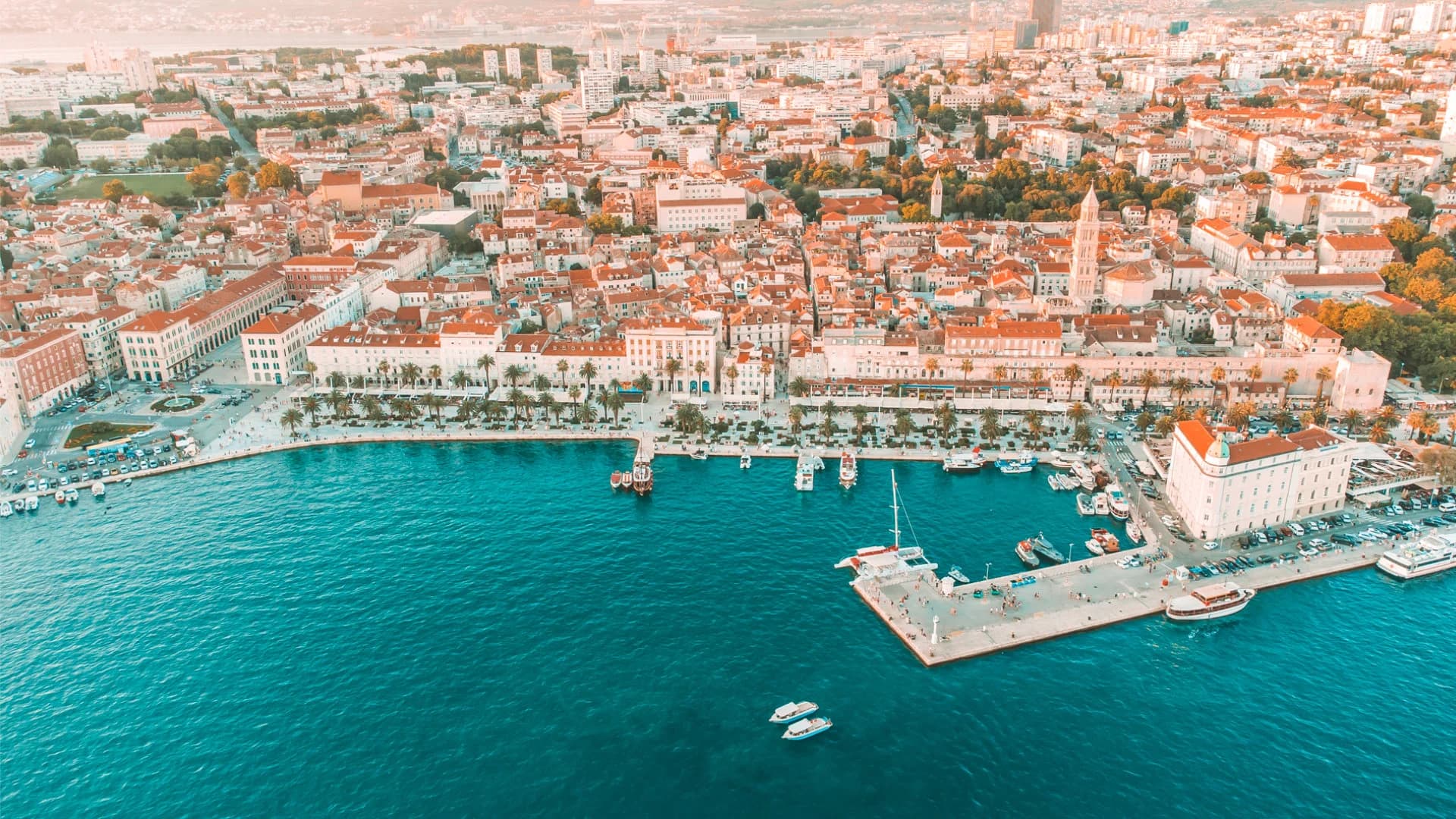
07:00: Samling vid Split-skylten på Rivan. Kaffe från en kiosk rekommenderas varmt. Du får din vindjacka, en kort säkerhetsgenomgång, ställer undan din väska och väljer plats på båten. Platserna under det främre taket är svalast under överfarten; platserna på akterns soldäck är bäst när vi saktar ner.
07:00–07:45: Avgång. Ut ur hamnen i Split, förbi Čiovo, och sedan syd-sydväst ut i öppet vatten. De första trettio minuterna är lugnast. Efter det kan du räkna med lite sjögång mitt i överfarten (inget dramatiskt en normal dag, men märkbar rörelse). Det är nu din åksjuketablett, om du tog en, gör sitt jobb.
09:30: Ankomst till Biševo. Vi lägger till vid den lilla bryggan alldeles utanför grottan, byter över i grupper om fyra eller fem till den lokala roddbåten, och köar i den ordning som grottmyndigheten bestämmer. Väntetiden under högsommaren kan vara tjugo minuter; under skuldersäsongen vanligtvis under fem. Det här är första stoppet i land sedan Split: här finns toaletter, och kaféet vid bryggan säljer kaffe och kalla drycker medan du väntar.
10:00: Inne i Blå Grottan. Ta fram telefonen, men acceptera att inget foto gör grottan rättvisa. Titta först på vattnet under dig, sedan upp mot det silverskimrande taket. Roddbåten cirklar långsamt runt. Tio till femton minuter inne.
10:30: Tillbaka på speedbåten. Kort sträcka norrut längs Biševos kust, och sedan österut mot Vis.
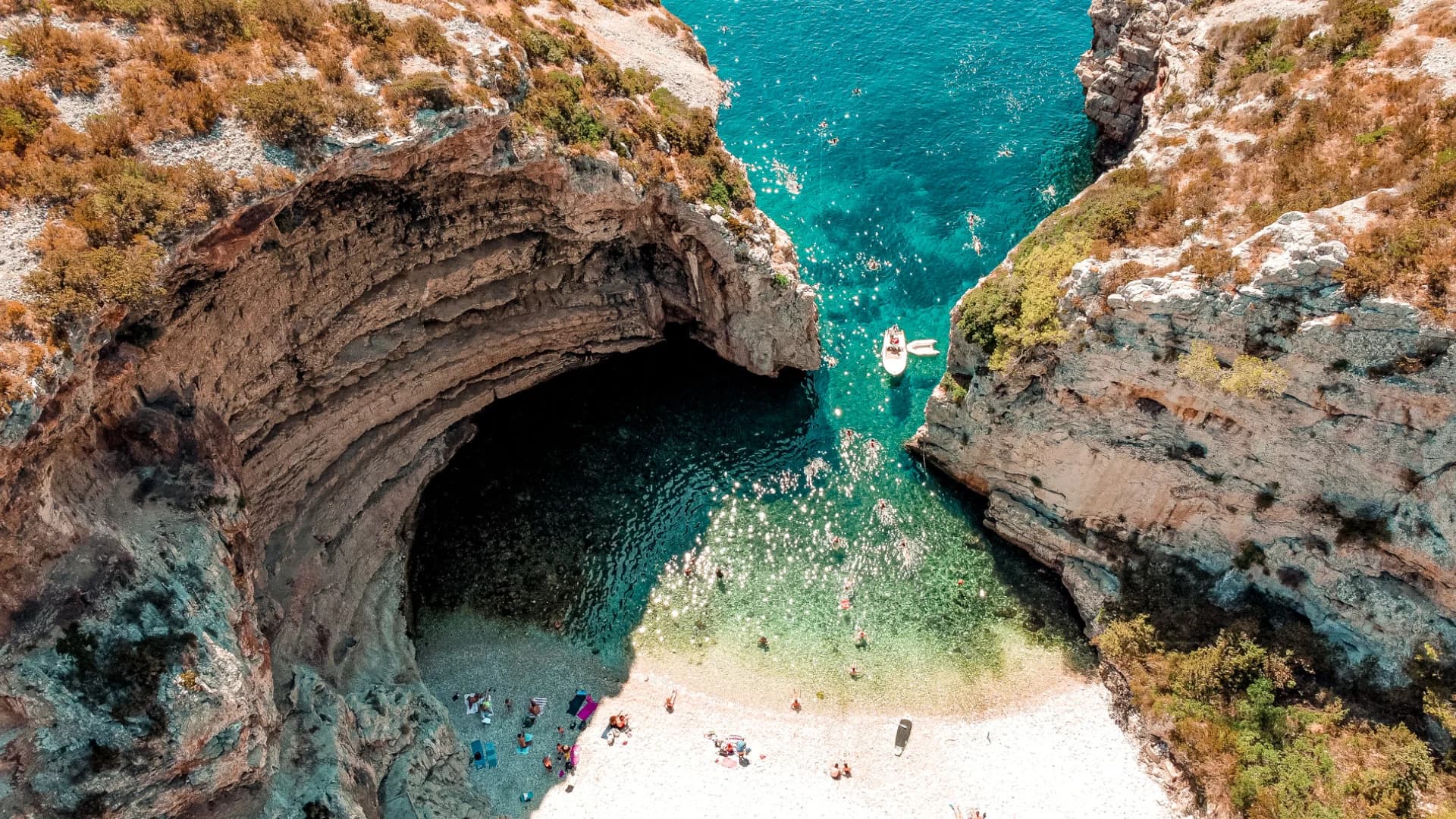
11:15: Stiniva, sett från vattnet. Skepparen går in tätt mot den smala klippöppningen och drar ner farten, och genom springan visar sig viken: ljusa stenar, turkost grundvatten, två bergsväggar som nästan möts ovanför. Röstad till bästa europeiska strand 2016, och titeln stämmer fortfarande. Vi ankrar inte och ingen går i land, så passagen tar ett tiotal minuter och tiden går till stoppen längre fram på dagen.
11:40: Budikovac. Tjugofem minuter nordost, och dagens första bad. Lagunen mellan Veliki och Mali Budikovac är grund, lugn, med nästan tropiska färger. Snorkelutrustningen tas fram: det här är rutens bästa snorkelstopp. Fiskarna är vana vid människor och nyfikna. En hel timme.
13:10: Gamla stan i Hvar. Cirka 30 minuter från Budikovac. Vi lägger till vid huvudhamnen. Du har drygt två timmar (gott om tid för en lunch på en konoba och en promenad på Pjaca). Vår besättning visar dig till ett par restauranger vi litar på inom fem minuters gång från hamnen, där maten är bra och lunchen går att avverka på under en timme utan stress. (Se vår separata guide till lunch i Hvar om du vill ha fler alternativ.)
15:20: Ut från Hvar och genom Pakleniöarna. Båten kryssar längs den tallklädda arkipelagen för utsikten: ingen ankring, inget dopp, bara ruttens vackraste tio minuter av sightseeing innan vi korsar kanalen mot Brač.
15:50: Milna på Brač. Dagens sista dopp, i den skyddade viken vid en stilla barock stenhamn på västra Brač. Lugnt vatten, inga folkmassor, en sista stilla stund i vattnet. En hel timme, längre än stoppet brukade få.
16:50: Avgång mot Split. Cirka en timme hem från Milna. Havet är oftast lugnare på eftermiddagen innanför öarna än det var på morgonens överfart till Biševo. Passagerarna på soldäck brukar somna in runt 30-minutersstrecket, vilket är den finaste komplimang en Blå Grottan-dag kan få.
17:50: Tillbaka och förtöjda vid Rivan (sommaravgångar går 30 minuter tidigare, så återkomstfönstret är 17:15–18:00). Total tur: fem stopp, ungefär 110 sjömil tillryggalagda, ett helt litet land upplevt på en enda dag.

Grottavgiften på Biševo, förklarad i detalj
Inträdesbiljetten till Blå Grottan ingår inte i priset hos någon seriös turoperatör i Split. Det är branschstandard och det finns en anledning: biljetten tas ut på Biševo av den lokala grottmyndigheten (Javna ustanova more i krš), som är ett separat offentligt organ, skilt från båtoperatörerna. De sätter priset, de sköter tillträdet, de håller roddbåtarna i drift.
För 2026 förväntar vi oss en avgiftsstruktur på ungefär €18 per vuxen under högsäsong (1 juli till 31 augusti), €15 under skuldersäsong och €10 från slutet av oktober. Barn 7 år och yngre betalar vanligtvis halva priset eller åker gratis. Det här är förra säsongens siffror förda framåt: vår besättning bekräftar exakt belopp på morgonen för din tur och berättar det för dig innan ni lämnar Split.
Ta med kontanter, i euro. Det finns ingen kortläsare på Biševo. Det finns ingen bankomat på Biševo. Om du kommer utan kontanter kan besättningen ibland lägga ut och ta igen pengarna av dig i Hvar (vi gör det ofta), men det är krångligt och beror på att skepparen har växelkassa den dagen. Ta bara med cirka €20 per vuxen i kontanter. Ärligt talat, ta bara med dem.
Avgiften täcker den lilla roddbåtsöverfarten in i själva grottan och det korta guidade besöket inne. Den täcker inget annat: inget annat stopp på rutten har någon avgift.
Vad du ska ta med ombord
Badkläder under kläderna. Det finns ingen toalett på en speedbåt för 12 passagerare, så att byta om ombord betyder att göra det på öppet däck, och du vill kunna hoppa i vattnet vid det första badstoppet utan att behöva tänka på det. Gå på Rivan innan du går ombord: första stoppet i land är Mezzoporat på Biševo ungefär två timmar ut, där kaféet också säljer kaffe och kalla drycker medan du köar till grottan.
En handduk: helst en i mikrofiber eller en snabbtorkande. Stora hotellbadhanddukar fungerar men tar upp halva däcksytan och hinner inte torka mellan stoppen.
Solkräm med hög SPF, gärna revsäker (vi kryssar genom marina reservat runt Biševo och delar av Pakleniöarna). Smörj in dig innan du lämnar hotellet, och smörj om vid varje stopp. Tio timmar på öppet vatten steker även motståndskraftig hud.
En riktig hatt: brättig för att skydda huden, keps som minimum. Polariserade solglasögon minskar bländningen från vattenytan och gör att du kan se fiskar genom vattnet, vilket spelar roll vid Budikovac.
Ett lätt långärmat plagg för överfarterna. Även i 32-gradig värme är vindavkylningen vid 23 knop verklig. Vi tillhandahåller vindjackor ombord; ett tunt lager under är bekvämare än enbart jackan.
Ungefär €30–€40 i kontanter per vuxen. Cirka €15–€20 till grottbiljetten, €15–€20 till lunchen i Hvar, plus lite marginal för glass eller en drink vid hamnen i Milna.
En vattentät telefonpåse eller en liten torrpåse. Skvätt på de öppna överfarterna går inte att undvika. En flytande påse för €15 med halsrem är den bästa utrustningsinvesteringen för den här typen av dag.
Åksjuketabletter om du någon gång haft sjösjuka, även mild. Ta en timme före avgång. Överfarten till Biševo kan vara guppig. (Se vår guide till packlistan för fler detaljer.)
Vatten: minst en och en halv liter per person. Vi bjuder på kalla drycker under hela dagen, men en egen flaska att dricka ur emellanåt är bättre än att vänta.
Badskor om du har några. Båda badstoppen, Budikovac och Milna, har steniga entréer som känns vassa under fötterna.

Bästa månaden att åka
Det finns ingen objektivt fel månad mellan maj och tidig oktober, men upplevelsen varierar märkbart under säsongen.
Maj är förmodligen den allra bästa månaden om du är flexibel med vattentemperaturen. Grottljuset är utmärkt, havet är lugnt på morgnarna de flesta dagar, köerna vid grottan är minimala, Hvar är halvtomt och rent behagligt, och priserna för både grupp- och privatturer ligger på sin förhögsäsongsnivå. Havet ligger på 18–20°C: uppfriskande snarare än varmt. Ta med en långärmad tröja.
Juni är det närmaste man kommer en gratis lunch: varmare vatten (21–23°C), fortfarande måttligt med folk, långa dagar, tillförlitligt lugna morgnar, och priser som ännu inte nått högsäsongsnivå. Om du flyger dit specifikt för resan, sikta på de tre första veckorna i juni.
Juli och augusti är högsäsong. Grottan är inte mindre vacker, men allt runt omkring är mer hektiskt. Kön vid grottan är längre (10–20 minuter är vanligt). Hamnen i Hvar är fullpackad. Stiniva blir trångt. Havstemperaturen är på sin varmaste (25–27°C). Priserna når sin topp. Boka fyra till sex veckor i förväg. Vardagar är betydligt bättre än helger.
September är den underskattade favoriten. Havet är fortfarande varmt (24–26°C i tidig september, 22–24°C sent i månaden), grottljuset förblir utmärkt, luften är torr, och folkmängden märkbart tunnas ut från ungefär den 5:e och framåt. Många gäster som kom i september skriver till oss ett år senare och vill boka en ny septemberresa. Vi rekommenderar den utan förbehåll.
Tidig oktober fungerar fortfarande fint. Ljuset är bra, havet ligger runt 21–23°C, folkmängden är minimal, priserna sjunker. Risken är en eller två väderdagar i veckan då grottan stängs av hamnkontoret, något högre än under högsommaren.
November och april–tidig maj rekommenderas inte för förstagångsbesökare. De är möjliga på bra dagar, men avbokningsfrekvensen är betydligt högre.
Dagen med barn, familjer, smekmånadspar och ensamresenärer
Barn från 8 år och uppåt brukar älska den här dagen. Grottan är en historia de kommer berätta för andra resten av livet. Stiniva är den typen av strand som ser ut som en dold värld. Vid Budikovac simmar fiskarna så nära att man nästan kan röra vid dem. De långa båtturerna är den svåraste delen: ta med en surfplatta med nedladdade program, mellanmål de faktiskt gillar, och en UV-baddräkt. Blå Grottan-rutten har en minimiålder på 5 år hos oss; ärligt talat är 8 år mer bekvämt, och barn under 5 bör istället välja en kortare halvdagstur.
Familjer på fyra eller fler bör räkna på matematiken bakom privat kontra grupp (se nästa avsnitt). Break-even-punkten för en privat båt på Blå Grottan-rutten ligger runt sex gäster. Under det är gruppturen bättre värde. Över det vinner den privata turen inte bara på pris per person utan även på flexibilitet: du bestämmer längden på badstoppen, du väljer om du vill byta Milna-stoppet mot en Pakleni-vik eller be om det ankrade stoppet vid Stiniva som gruppdagen inte gör, du tar med din egen musik. Vi ser många familjer på fem eller sex som per automatik väljer gruppturen och sedan önskar att de hade uppgraderat.
Smekmånadspar och andra par delar sig i regel i två läger. Det romantiska och avslappnade lägret bör överväga en privat Blå Grottan-tur med ett champagnestopp i en Pakleni-vik i slutet av dagen: skillnaden i känsla mellan att dela båt med 10 främlingar och att ha den för er själva är stor. Det sociala och nyfikna lägret trivs utmärkt på gruppturen och blir ofta vän med ett annat par ombord, särskilt under skuldersäsongen då grupperna är mindre.
Ensamresenärer trivs mycket bra på gruppturen. Det är en av de enklaste sociala dagarna du kommer ha i Kroatien. Vid det att ni når Stiniva kan du redan allas namn. Vid lunchen i Hvar har du ett helt sällskap. Vardagsmorgnar i juni eller september brukar dra till sig den bästa blandningen (ensamresenärer, par, mindre vänskapsgrupper), och vi har tappat räkningen på alla de långvariga vänskaper som börjat under en Blå Grottan-dag.
Ombokning vid dåligt väder och vad som händer när grottan stängs
Blå Grottan stängs av hamnkontoret på Biševo när sjöförhållandena vid grottans ingång är osäkra för de små roddbåtarna. Det händer oftare än gäster förväntar sig (vanligtvis tre till sju dagar per säsong, ibland fler under år med aktiva Bura-mönster i september). Det är ingen tragedi, men det är något man bör tänka på.
En given morgon ser beslutsprocessen ut så här: skepparen kollar sjöväderprognosen klockan 05:30 och igen klockan 06:30, hamnkontoret på Biševo publicerar ett dagligt beslut runt 07:00, och vi tar vårt beslut innan vår avgång 07:00–07:45. Om förhållandena ser marginella ut åker vi ibland ändå och avgör rutten ute på vattnet: ibland förbättras morgonen, ibland gör den inte det.
Om vi ställer in innan avgång på grund av väder får du välja mellan full återbetalning eller ombokning till valfritt tillgängligt datum som passar din resa (ditt beslut, inga frågor). Om vi lämnar Split och grottan stängs under rutten kör vi en justerad rutt (vanligtvis mer av Vis kust och ett längre stopp vid Budikovac, ibland en avstickare genom södra Pakleni) och återbetalar helt eller delvis beroende på vad vi lyckades leverera. Vi behåller inte pengar för en Blå Grottan vi inte visade dig.
Det absolut bästa sättet att minska risken, om du kommer specifikt för Blå Grottan och har flexibilitet i schemat, är att boka den första eller andra dagen av din vistelse i Split istället för den sista. På så sätt kan vi boka om inom din vistelse om vädret ställer till det. Att boka grottan till sista dagen är den vanligaste tajmingångern vi hör folk ångra.
Grupp kontra privat: matematiken
Blå Grottan-grupptur: €110 per person för vår grupptur 2026, fast avgång 07:00–07:45, delad båt med upp till 12 gäster, fasta tider på rutten. Utmärkt valuta för pengarna för alla gruppstorlekar upp till fyra. Vid sex gäster blir totalkostnaden €660.
Privat Blå Grottan-tur: prissatt per båt, €1,300 för samma rutt på samma typ av båt. Helt flexibelt: din avgångstid, dina stopplängder, din musik, bara ditt eget sällskap. Hoppa över ett stopp, dröj dig kvar någonstans, byt ut Hvar mot en extra timme vid Stiniva: allt är möjligt.
Break-even-punkten rent prismässigt hamnar runt tolv gäster: 12 × €110 = €1,320, jämfört med €1,300 för samma båt privat. Så strikt räknat på kostnad per person vinner gruppturen fortfarande för grupper upp till omkring elva, men de flesta grupper på sex till åtta tycker att den privata upplevelsen är värd tillägget på grund av flexibiliteten och avskildheten. För grupper på elva till tolv är privat ungefär samma totalkostnad som att köpa ut hela gruppturen, men med full anpassning inkluderad.
Specifikt för familjer: grupper på fem eller sex har oftast nytta av privat även med högre kostnad per person, eftersom dagen då anpassas efter barnens energinivå istället för efter ett fast schema. Om en tvååring vaknar sur på en privat båt kan ni korta ner Stiniva och åka rakt till den lugna lagunen vid Budikovac. På gruppturen är det inte ett alternativ.
Där privat tydligt vinner oavsett kostnad: smekmånader, familjedagar med flera generationer, alla med rörelsenedsättning, alla som vill ha alkohol ombord (drycker på gruppturen är alkoholfria som standard), och alla som tar med sin egen GoPro och vill ha tid att filma utan 10 andra passagerare i bild.
Vanliga frågor
Ingår inträdesbiljetten till Blå Grottan? Nej. Den betalas på plats kontant på Biševo. Räkna med €24 per vuxen under högsäsong (20 juni–10 september) och €18 under resten av säsongen.
Hur länge är vi egentligen inne i grottan? Tio till femton minuter. Besöket är kort eftersom ingången är liten och grottmyndigheten styr flödet.
Kan vi simma inne i grottan? Nej. Simning inne i grottan är inte tillåten. Ni stannar i den lilla träroddbåten som körs av de lokala handläggarna.
Vad händer om jag blir sjösjuk? Ta en åksjuketablett en timme före avgång. Välj en plats mitt i båten (mindre rörelse än fram eller akter). Drick tillräckligt med vätska och undvik tung mat innan avgång.
Vad händer om vädret är dåligt? Om vi ställer in får du en gratis ombokning eller full återbetalning, ditt val. Om vi kör en justerad rutt återbetalar vi helt eller delvis baserat på vad vi levererade. (Se vår separata guide om ombokning vid dåligt väder för detaljer.)
Hur tidigt bör jag boka? För juli och augusti: fyra till sex veckor i förväg för grupp, sex till åtta veckor i förväg för privat. För skuldersäsongen räcker oftast tre till tio dagar för grupp.
Kan små barn följa med? Vår minimiålder är 5 år. Vi rekommenderar starkt 8 år och uppåt för komfortens skull. Barn under 5 år trivs bättre på en kortare halvdagstur.
Finns det toalett ombord? Nej. Ingen av våra speedbåtar har någon, så använd toaletterna på Rivan innan vi lägger ut. Första stoppet i land är Mezzoporat på Biševo, ungefär två timmar efter avgång, där kaféet också säljer kaffe och kalla drycker medan du väntar på grottan. Efter det är det Hvar.
Ingår lunch? Nej. Vi stannar i Hvar i två timmar (gott om tid för en sittande lunch). Räkna med €15–€25 per person för en måltid på en konoba.
Kan vi boka mindre än 24 timmar i förväg? Ibland, särskilt under skuldersäsongen. Skriv direkt till besättningen på WhatsApp så berättar vi ärligt om det finns platser kvar eller inte.
Är Blå Grottan samma sak som Blå Lagunen? Nej, det är två helt olika platser. Blå Grottan ligger på Biševo, två timmar från Split. Blå Lagunen ligger vid Drvenik, 45 minuter från Split. (Se vår halvdagstur till Blå Lagunen för den.)
Behöver jag vara en stark simmare? Inte för själva grottan (ni stannar i roddbåten). För badstoppen vid Budikovac och Milna är grundläggande simkunnighet en fördel, men flytvästar finns tillgängliga för den som vill ha en.
Vilket språk hålls turen på? Engelska, med besättning som även klarar italienska, tyska och grundläggande kroatiska. Kommentarerna vid varje stopp är på engelska.
Är delfiner garanterade? Nej, de är vilda djur. Men överfarten till Biševo går genom delfinernas habitat och observationer är vanliga, särskilt i maj, juni och september. Skepparen gör en kort avstickare om en flock upptäcks.
Fördjupande läsning: om du vill ha mer bakgrund tar vår djupdykning i grottavgiften, guiden till timing månad för månad, matematiken för en grupp på 8 i privat regi, den ärliga guiden till sjösjuka, och den praktiska familjeguiden till Blå Grottan var för sig upp en del av dagen i detalj. Bokningar finns på /tours/blue-cave-5-island-tour för grupp och /tours/blue-cave-private-tour för samma rutt på egen båt.
Ready to plan the route?
Compare group and private speedboat tours from Split, or go directly to the route mentioned in this guide.
About the author

Marinko
Co-founder & Skipper · 20 seasons in Split
Co-founder and one of the two captains who built Navy Blue Yachting from a single boat. Over 20 years on the Adriatic and a lifelong passionate fisherman, he reads sea conditions the way most people read a weather app. If you are on a flagship Blue Cave day in shoulder season, he is most likely the captain.
Meet the rest of the crew →Common questions
Vilken tid avgår Blå Grottan-turen från Split?
07:00 från 16 juni till 15 september, och 07:45 från 1 maj till 15 juni samt från 16 september till 1 november. Ombordstigning sker 15 minuter före avgång. Starttiden flyttas eftersom ljuset inne i grottan når sin topp vid olika tidpunkter under säsongen.
Vad mer ingår i Blå Grottan-turen?
Klippöppningen vid Stiniva på Vis, som vi passerar från vattnet utan att ankra, sedan lagunen vid Budikovac, gamla stan i Hvar och ett sista bad utanför Milna på Brač. Fem stopp totalt: passagen förbi Stiniva är det kortaste, och grottan är det alla bokar turen för.
Vad ska jag ta med på Blå Grottan-turen?
Kontanter till grottavgiften och lunchen, en baddräkt buren under kläderna, revsäker solkräm, en hatt och ett lätt vindtätt plagg. Snorkelutrustning, vatten och jackor finns ombord.
Vad händer om Blå Grottan är stängd?
Resten av rutten körs som vanligt och grottavgiften tas inte ut, eftersom ni inte går in. Om hela dagen inte kan genomföras säkert flyttar ni den till ett annat datum eller får full återbetalning, deposition inkluderad.