
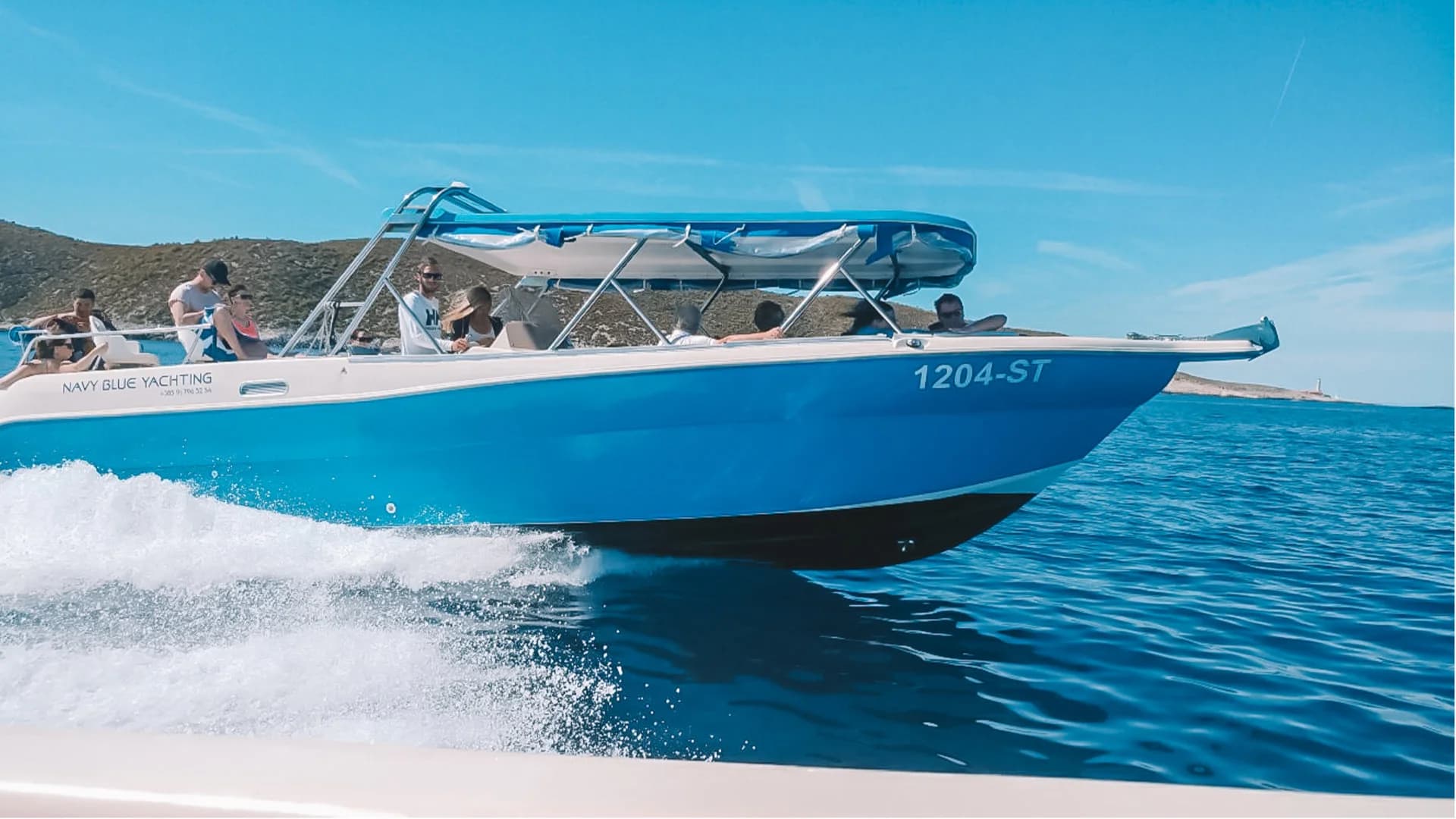
Vinprovning på Vis: en annan sida av Blå Grottans ö
Så tillbringar du en dag med vinprovning på Vis, ön mest känd för Blå Grottan: Vugava, Plavac Mali, familjevingårdarna
By Marinko (Co-founder & Skipper) · 7 min läsning · Updated 2026-09-01
Varför Vis är en vinö
Vis har odlat vin i 2400 år. Grekiska kolonisatörer förde med sig vinrankor från Issa under 4:e århundradet f.Kr. Romarna utökade produktionen. Venetianarna förfinade den. Öns isolering under det 20:e århundradet (stängd för utländska besökare som jugoslavisk militärbas från 1944 till 1989) bevarade de gamla sorterna och metoderna som andra öar förlorade.
I dag har Vis omkring 300 hektar vingårdar och en handfull små familjevingårdar. Öns vinidentitet bygger på två inhemska druvsorter: Vugava (vitt) och Plavac Mali (rött), båda med sina egna uttryck i Vis jordmån.
Vugava: det inhemska vittvinet
En vit druva som odlas nästan uteslutande på Vis. Blekgul, fyllig, med toner av aprikos och torkade örter. Högre alkoholhalt än de flesta vita viner (vanligtvis 13 till 14 procent).
Passar utmärkt till grillad fisk, den skaldjursrisotto som köken på Vis lagar särskilt bra, och lagrade ostar.
Du hittar inte Vugava i många vinbutiker utanför Kroatien. Att dricka det på Vis är det enda realistiska sättet att uppleva det.
Plavac Mali: det dalmatiska rödvinet
Kroatiens mest kända rödvin, som odlas längs hela den dalmatiska kusten och öarna. Vis har ett särskilt terroir (havspåverkat, mineralrikt) som ger Vis Plavac Mali en skarpare karaktär än de mer kända versionerna från halvön Pelješac.
Djupröd, fyllig, med toner av mörka bär, fikon och medelhavsörter. 13.5 till 15 procent alkohol: det är ett seriöst vin, inte en lätt eftermiddagsklunk.
Passar till grillat lamm, hårda ostar och rika dalmatiska rätter som pašticada (nötkött grytat i rödvin).
Vingårdarna att besöka
Lipanović. En familjevingård nära Komiža som gör utmärkt Vugava och Plavac Mali. Besök efter överenskommelse, provning i en renoverad stenkällare. Autentisk, familjedriven, och vinerna anses allmänt vara bland de bästa på Vis.
Roki's. Nära Plisko Polje i Vis inland. Känt för både vin och den traditionella konoban på plats. Ett populärt mål för lunch och provning: boka i förväg.
Senjković. Ytterligare en familjedriven vingård i inlandet, med ett lugnt provningsrum och ett litet sortiment av välgjorda flaskor.
Det här är inga kommersiella turistanläggningar. Det är aktiva familjevingårdar som tar emot besökare efter överenskommelse. Upplevelsen är genuin, vinerna är utmärkta och priserna är rimliga.
Så lägger du upp en vindag på Vis
Ta katamaranen från Split till Vis stad (90 minuter, cirka 15 €) med morgonturen. Anländ till Vis omkring 09:00.
Hyr en skoter eller bil för dagen vid hamnen. Vis är inte stort (17 km långt), men vingårdarna ligger i inlandet och ett fordon är nödvändigt.
Förmiddagsbesök på en vingård (Lipanović eller Senjković). Provning plus en kort promenad i vingården.
Lunch på Roki's i inlandet, eller på en konoba i Komiža på sydkusten. Komiža är den pittoreska fiskebyn nära Blå Grottan.
Eftermiddagsbesök på ytterligare en vingård, eller ett dopp på någon av stränderna på sydkusten.
Katamaran tillbaka till Split med kvällsturen (vanligtvis 17:00 till 19:00).
Så kombinerar du vinfokus med Blå Grottan
Blue Cave 5 Island Tour inkluderar ingen tid i Vis inland eller besök på vingårdar: båten lägger till vid grottan och passerar klippöppningen vid Stiniva på sydkusten utan att gå i land. Vingårdarna kräver ett separat besök.
För resenärer som vill ha båda delarna: gör Blå Grottan-rutten från Split en dag, övernatta sedan i Vis stad och gör vindagen dag två. En vistelse på Vis med två övernattningar är det mest givande sättet att uppleva ön.
Alternativt går det att göra en privat dag med snabbbåt med ett stopp i Vis stad och en förbeställd taxi till en vingård. Bygg in det i en privat tur: diskutera med researrangören i förväg.

Praktiska köptips
Vingårdarna har oftast flaskor till försäljning till provningspriser: 10 till 25 € per flaska för basortimentet, 30 till 50 € för specialcuvéer.
Gränserna för alkohol i handbagage spelar roll om du flyger. Kontrollera flygbolagets regler. Kroatien är med i EU, så resor inom EU är mer flexibla.
En trälåda från en vingård är en minnesvärd present att ta med hem. Vissa vingårdar ordnar frakt för större beställningar.
De bra flaskorna blir inte liggande i lager: populära årgångar tar slut redan i augusti.
Komiža som stopp för vin och fisk
Komiža är den södra fiskebyn på Vis. Vitkalkade hus längs en böjd vik, en levande hamn och konobor som serverar lokal fisk.
Flera restauranger i Komiža har utmärkta lokala vinlistor. En lunch med grillad fisk och en flaska Vugava i Komiža är en minnesvärd upplevelse i Kroatien.
Komiža är också avreseplatsen för Blå Grottan: turbåtarna till Vis avgår härifrån. Om du övernattar i Komiža kan du göra en lokal grottutflykt på morgonen och en vineftermiddag under samma resa.
Vem det här passar för
Vinintresserade resenärer. Par på en lugn resa. Alla som redan har gjort standardturen till Blå Grottan och vill ha en djupare Vis-upplevelse.
Inte idealiskt för familjer med små barn eller gäster som bara har en dag i Split.
Mer läsning: se även jämförelsen färja mot snabbbåt från Split till Blå Grottan, guiden till Stiniva Beach, den kompletta guiden till Blå Grottan, och artikeln om det sjunkna skeppet vid Maslinica på Šolta. Den privata rutten finns på /tours/blue-cave-private-tour.
Ready to plan the route?
Compare group and private speedboat tours from Split, or go directly to the route mentioned in this guide.
About the author

Marinko
Co-founder & Skipper · 20 seasons in Split
Co-founder and one of the two captains who built Navy Blue Yachting from a single boat. Over 20 years on the Adriatic and a lifelong passionate fisherman, he reads sea conditions the way most people read a weather app. If you are on a flagship Blue Cave day in shoulder season, he is most likely the captain.
Meet the rest of the crew →