
Blue Cave with a Photographer Aboard: Getting the Shot
How to plan a Blue Cave private tour designed around photography: best month and time, gear that works on a boat, how to capture the cave, Stiniva
By Luka (Sailor & Guest Host) · 7 min read · Updated Friday, 28 August 2026
Why private for photography
A group tour follows a schedule. A photographer needs the flexibility to wait for the light, return for a missed shot, spend an extra 30 minutes at a viewpoint or leave early for the next location. Private booking buys exactly this flexibility.
It also buys deck space. Mounting a tripod or carrying multiple lenses on a 12-person shared boat is awkward. On a private boat, the bow is your shooting platform.
Best month for serious photography
September. The sea is among the calmest of the season, light is gold-warm in the morning and evening, and crowds are thin.
Late May is a strong second. Sharp clean light, low haze, almost no crowds at Stiniva or the cave queue.
October works if you can deal with weather variability. The light is the most cinematic of the year, but the season is closing.
Avoid July and August for serious photography. Heat haze blunts the sharpness, the Maestral chops the open sea, and crowds in every shot are unavoidable.
Inside the cave: settings and approach
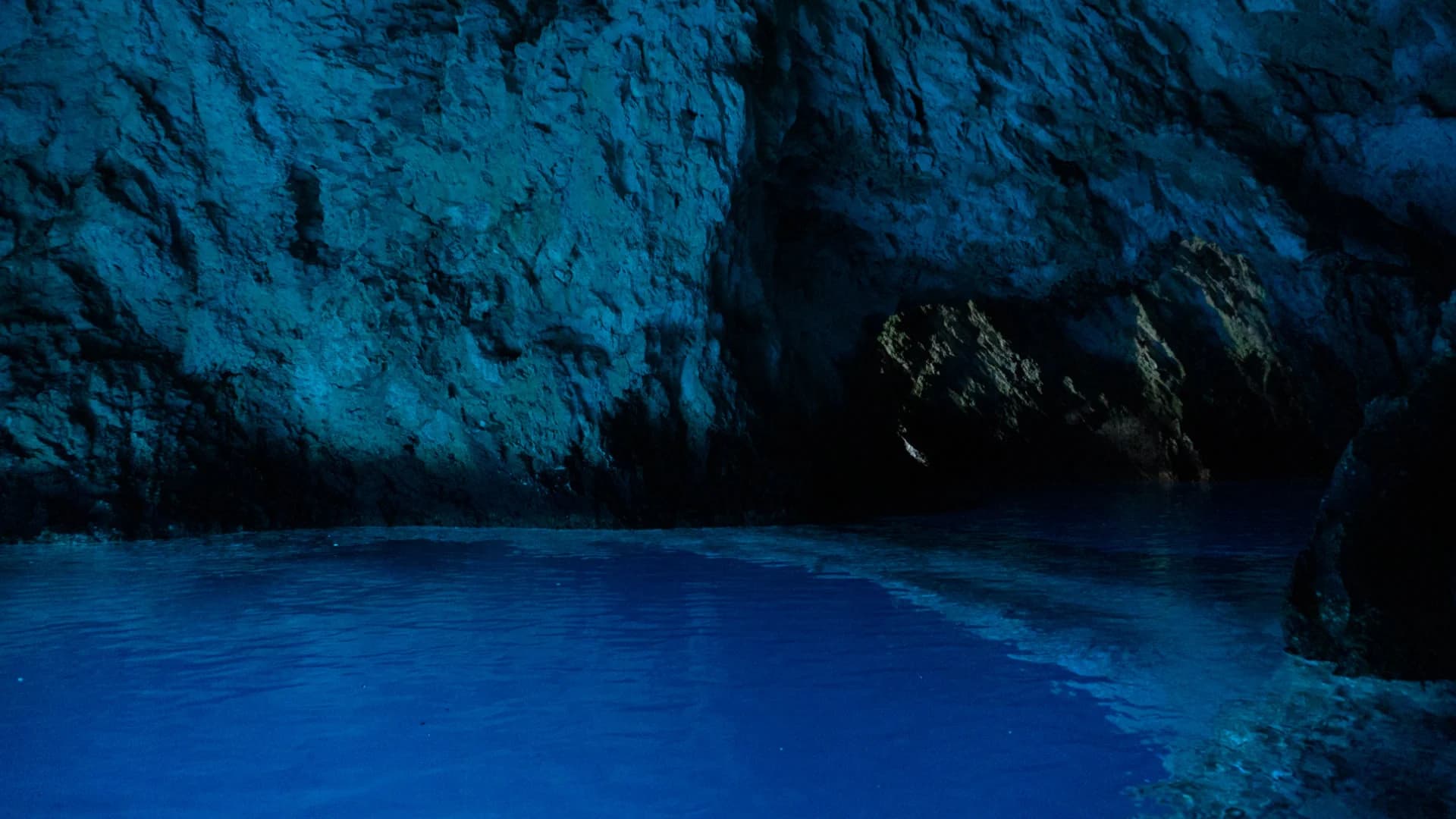
The Blue Cave is dim compared with the open sun outside. You need a fast lens (f/2.8 or wider) or high ISO. ISO 1600 to 3200 is normal here.
Shutter speed 1/60 minimum to handle hand-holding in a small rocking rowboat. Wider aperture helps. Image stabilisation is worth it.
The blue cast is real, so do not white-balance it out. The whole point of the photograph is the colour. Shoot raw if possible so you can fine-tune later.
A wide-angle lens (16 to 24mm full-frame, 10 to 18mm crop) captures the cave geometry. A 35mm equivalent works for people-in-cave shots.
Stiniva: the dramatic shot
The classic shot is from the cliff above looking down into the bay through the narrow entrance gap, which means a hike and a substantial detour for a boat tour. On a private day you can ask to anchor just outside the entrance: you see the gap, the cliffs, the swimmers, and the bay all in one frame.
A 24 to 70mm zoom is the right range. ISO 100 to 400, f/8 to f/11 for depth, 1/500 or faster to freeze water motion.
Best time: late morning when the sun is overhead and the bay is fully lit. Earlier in the morning the bay is in shadow.
Hvar from the boat: the harbour shot
Approaching Hvar town from the west, the marble waterfront and the fortress above present at the same angle as the postcards. Best taken from a little way offshore.
A medium telephoto (70 to 200mm) compresses the layers nicely: boats in the foreground, town middle, fortress rising behind.
The light is best in the late afternoon when the sun is behind you and the town is fully lit. On the group 5-island day you reach Hvar at lunchtime, so shoot from the boat as you arrive or depart and accept the midday light.
Pakleni Islands: golden hour
The Pakleni Islands at sunset are the postcard Croatia photograph. Pine silhouettes against an orange-violet sky, anchored boats in calm water, the sea catching the last gold.
A private tour can extend the day to catch this. Standard return is 17:00 or 17:45; on a private day, ask us whether the day can be stretched to catch the light. This affects the return time to Split, so confirm the logistics first.
Lens: 24 to 70mm covers it. ISO 100 to 800 depending on the moment. A tripod helps but is not essential, since image stabilisation is enough for golden hour.

Boat practicalities for camera gear
Dry bag essential. Salt spray on the open crossings is unavoidable. A roll-top dry bag for camera bodies and lenses is the difference between great photos and a destroyed camera.
Strap your camera. A drop into salt water is non-recoverable. Wrist strap or neck strap, always attached when shooting.
Microfibre cloth for salt spray on the lens. A small pack of lens wipes is worth its weight.
Spare batteries: cold mornings drain batteries faster. Bring two.
Working with the skipper
Tell us before the trip what you want to photograph. Specific shots, specific light, specific time. We plan the day accordingly.
During the day, say when you want to slow down or stop. We are happy to adjust the stops if it gets you the shot. Private boats are built for this.
Ask for local knowledge. The skipper knows which Pakleni bay catches the best sunset light, and which cove on Vis has the best angle for cliffs.
Editing back home
Shoot raw. Adriatic colours, from the deep cobalt of the open sea to the electric blue of the cave and the gold of the Pakleni sunset, benefit dramatically from raw editing.
Resist the urge to overboost saturation. The colours are already strong. Lifting shadows and managing highlights gives the best results.
White balance: trust the camera or shoot a neutral reference card on the boat. The midday Adriatic looks slightly cool, which is correct, so do not warm it artificially.
Further reading: for adjacent reads, our Hvar-to-Split sunset return guide, the September shoulder-season piece, the honeymoon Blue Cave ideas, and the Pakleni Islands which-bay write-up help plan a photo-led day. Private booking is on the Blue Cave Private Tour page.
Ask us about the route
Compare group and private speedboat tours from Split, or go directly to the route mentioned in this guide.
5 Island Private Tour
From €1,250 /per boat · 10 hours
Price on 10 Sept 2026: €1,300
About the author

Luka
Sailor & Guest Host · 5 seasons in Split
Five seasons on board. Luka hands out the water, fits snorkel masks, helps kids climb back up the ladder, and answers every question about Dalmatian islands you can think of. If the boat feels like a relaxed afternoon among friends, that is largely Luka.
Meet the rest of the crew →